


How To Choose Pet Bone Plates: 6 Most Frequently Asked Clinical Questions
Oct 02, 2026
Leave a message
After completing an orthopedic surgery, the conversation among surgeons often focuses less on the incision itself and more on whether the right plate was chosen. While a bone plate may look like a simple piece of perforated metal, the actual process-involving selection, component matching, fixation, and eventual removal-presents numerous challenges. Here, we address the six questions most frequently asked in clinical practice.
1. What is the difference between a locking plate and a conventional bone plate?
Conventional plates rely on surface pressure against the bone to provide fixation via friction; the screws simply press the plate down. Locking plates function differently: the screw heads are threaded to interlock with the threaded holes in the plate, effectively fusing the plate and screws into a single, rigid construct. In short, the former relies on compression, while the latter provides structural support. Consequently, locking plates offer angular stability and superior resistance to rotation and shear forces, making them particularly advantageous for fractures at the bone ends (epiphyses/metaphyses) characterized by multiple fragments where achieving compression is difficult.
2. Where are T-shaped plates best used?
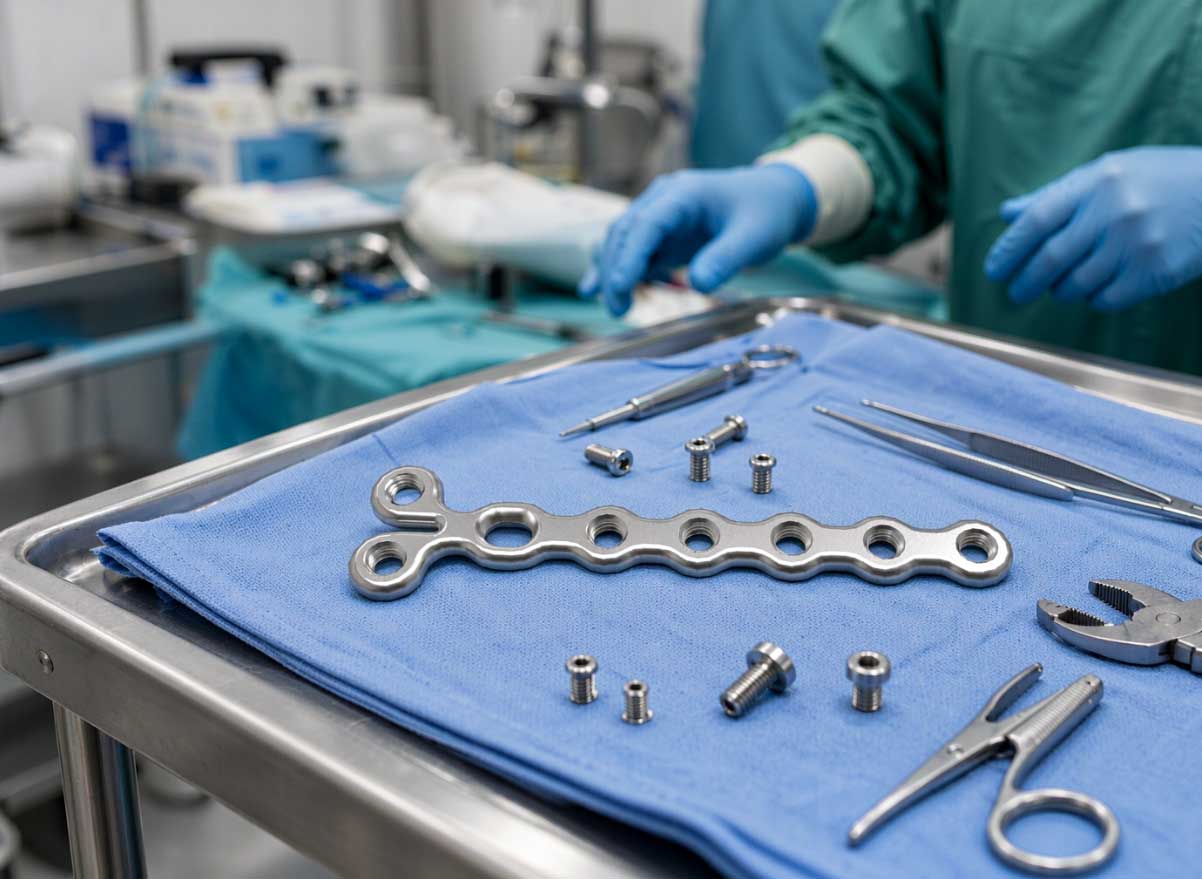
The design of a T-shaped plate is straightforward: the transverse arm at the head spans the fracture line, allowing screws to be inserted at multiple angles to capture and secure bone fragments. They are ideal for "H-shaped" or "T-shaped" fractures at bone ends (such as the metaphysis or peri-articular regions), where a standard straight plate would offer insufficient screw placement options or suboptimal load distribution. For instance, the 1.5mm T-shaped Locking Plate from Shanghai Fangzheng Medical-featuring two holes in the head and six in the shaft-is specifically designed for such fractures; the shaft holes are arranged along a wavy edge, ensuring a more natural contour fit against the bone surface.
3. Is it possible for locking screws to become stuck and impossible to remove?
Under normal operating conditions, this does not happen-provided that compatible locking screws and the specified torque are used, and care is taken not to strip the threads. Because locking plates and screws rely on an interlocking mechanism, stripping the threads (cross-threading or damaging the screw head) can make subsequent screw removal difficult. Therefore, do not force the screw all the way in during surgery; if you feel resistance or "grittiness," stop and check. Similarly, when removing a screw, unscrew it slowly without applying excessive force; using brute force is the step most likely to cause complications.
4. The bone plate is so small-is it strong enough to bear the load?
A plate's ability to withstand loads depends not on its size, but on the integrity of the entire structure formed by the plate and screws. Areas like the carpal, tarsal, and phalangeal bones in small dogs and cats do not require large plates; the key is selecting the right system and screw diameter to ensure the plate contours to the bone and the screws achieve bicortical purchase. A small plate that fits precisely is far more reliable than a large plate that bridges the bone without proper contact.
5. Should the bone plate be removed after surgery?
It is not mandatory. Most animals show no significant symptoms if the metal plate remains in the body. A second surgery for removal is considered only if there is loosening, infection, a significant foreign-body reaction, or interference with joint function. For plates used in joint arthrodesis or fixation of bone ends, the decision to remove them depends on the surgeon's judgment and postoperative imaging; there is no need to remove them simply for the sake of removal.
6. How do I match plate models with screws? What is the postoperative care?
Selection is based on the fracture site and bone dimensions: plate length, number of holes, and screw diameter must all align. It is better to ensure the plate fits the bone perfectly than to force a fit just to match specifications. The first step in postoperative care is restricting activity to allow the fixation structure to properly bear the load; follow-up radiographs should be taken at intervals to monitor callus formation. Doing these two things well is far more effective than any nutritional supplement.

A final note
When choosing a bone plate, bigger or more expensive isn't necessarily better; the choice must match the anatomical site and the animal's size. Even with locking plates, using them in the wrong location can lead to problems. Take the T-shaped Locking Plate mentioned earlier: it is ideal for fractures at the end of a bone but may not be suitable elsewhere. Placing the plate in the correct position is the entire point of internal fixation.
Send Inquiry