


What Is a Dog Training Collar and How Does It Work?
Oct 29, 2026
Leave a message
What is a dog training collar?
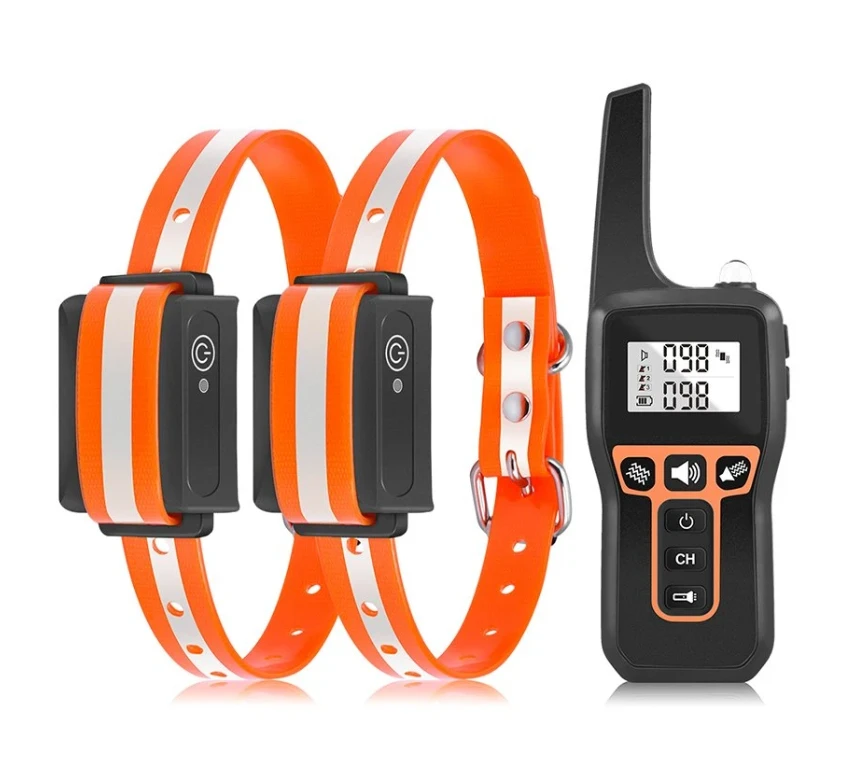
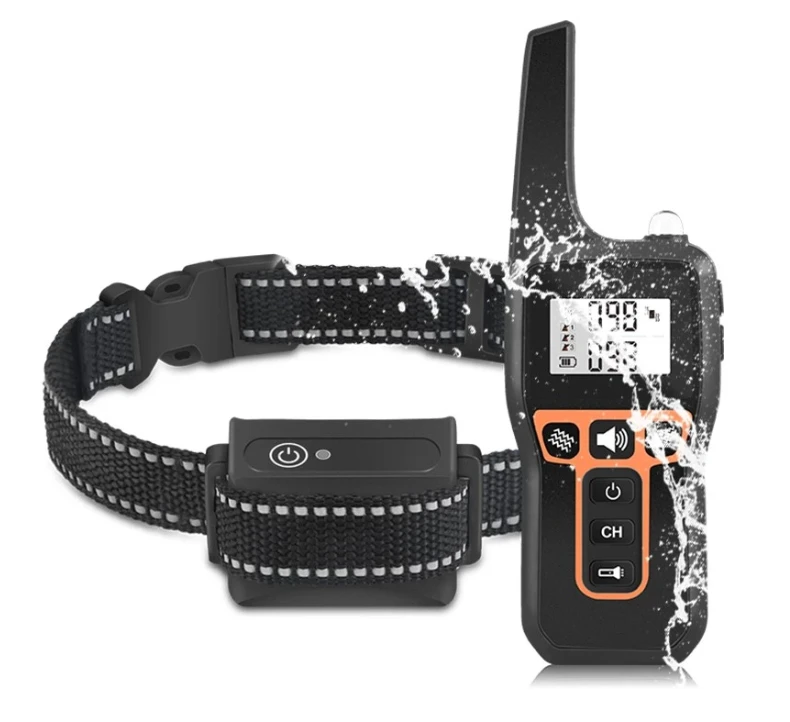
A dog training collar is a device that assists in dog training. It typically consists of a collar receiver worn around the dog's neck and a remote control held by the owner. The owner can send commands to the collar via the remote control, helping the dog respond better to commands during outdoor activities, recall training, obedience training, and daily behavior management.
For dogs that love to run outdoors and are easily distracted by other animals or their environment, ordinary verbal commands can sometimes be ineffective from a distance. A training collar with a remote control allows the owner to give prompts to the dog within a certain range, combining them with commands such as "come," "stop," and "wait" for training.
It's important to note that a dog training collar cannot replace systematic behavior training. Its actual effectiveness depends on the dog's personality, the training method, the environment in which it is used, and whether the owner can operate it correctly.
How do dog training collars work?
Remote-controlled dog training collars primarily function through wireless communication between a remote control and the collar's receiver. When the owner presses the corresponding button on the remote control, the collar's receiver receives the command and responds according to the device's preset functions.
Different dog training collar models may offer different functions such as sound cues, vibration cues, or electronic stimulation. Specific functions depend on the actual configuration of the product.
Sending Training Commands via Remote Control
During training, the owner can hold the remote control and choose appropriate prompts based on the dog's behavior. For example, in recall training, when the dog runs to a distant location, the owner can first issue a familiar verbal command, then use the device's prompting function to guide the dog's attention back to the owner.
The advantage of this type of device is that the owner doesn't always have to walk to the dog's side to issue prompts. However, remote control distance doesn't mean the dog will automatically understand the commands; repeated training is still needed to establish the correct behavioral response.
Remote Control Distance Up to 1000 Meters
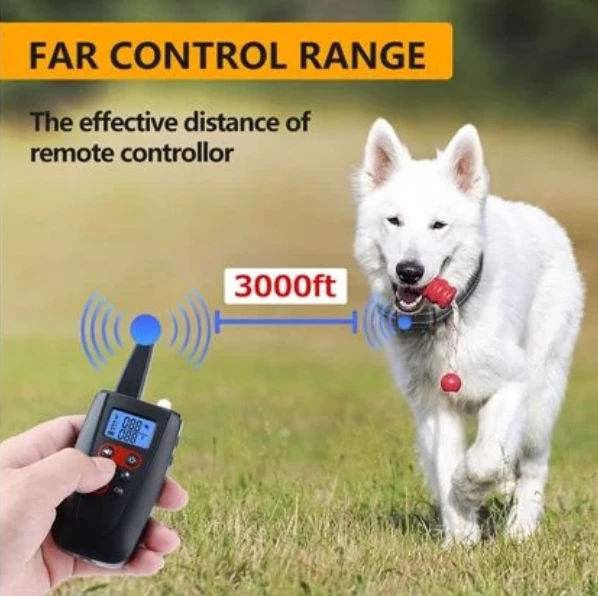
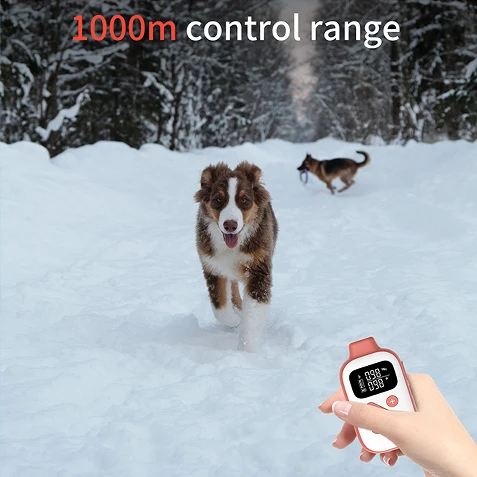
This dog training collar comes with an independent remote control, with a nominal remote control distance of up to 1000 meters. In open outdoor environments, even when the dog has run a considerable distance, the owner can still send training commands via the remote control to assist with recall and obedience training.
For dogs that frequently roam in parks, grassy areas, or large outdoor spaces, the longer remote control distance provides greater operational flexibility.
However, it should be noted that 1000 meters is typically the maximum nominal distance under specific testing conditions. In actual use, the wireless signal may be affected by factors such as buildings, trees, terrain, obstacles, electromagnetic interference, and battery status, therefore, this distance cannot be guaranteed in all environments. The remote control collar cannot replace a leash, fence, or other necessary safety measures.
Assisting Training with Different Cue Methods
Depending on the specific configuration of the device, remote-controlled dog collars may support the following cue methods:
- Sound Cue: Attracts the dog's attention with sound, suitable for use in conjunction with verbal commands.
- Vibration Cue: Reminds the dog to pay attention to signals given by the owner through vibration.
- Electronic Stimulation: Some models offer electrical stimulation functions of varying intensities. This function may cause pain, fear, or stress and should not be considered the default training method; reward training is recommended first, and consultation with a qualified canine behavior professional should be sought if necessary.
Regardless of the cue method used, the dog should first understand the meaning of the corresponding signal. The focus of training is to help the dog learn the correct behavior, not simply to rely on the device to make the dog obey.

What are the features of this dog training collar?
Suitable for dogs weighing approximately 4–120 lbs
This product is labeled as suitable for dogs weighing 4–120 lbs (approximately 1.8–54 kg), covering small, medium, and large breeds.
The wider weight range provides more options for different dog-owning families. However, whether the collar will fit comfortably for your dog needs to be confirmed by considering neck circumference, collar length, contact part dimensions, and the product instructions. The weight range is for reference only and does not mean that all dog sizes and neck dimensions are suitable for the same collar.
Before purchasing, it is recommended to measure your dog's neck circumference and confirm that the collar fits securely and comfortably. Extra caution should be exercised with puppies, very small dogs, or dogs with skin problems, neck discomfort, or obvious fear reactions.
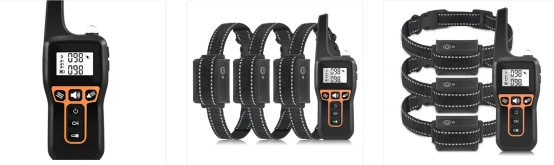
One remote control can control three collars
This dog training collar's remote control can memorize and independently control up to three collar receivers. Owners can switch between different collars to manage different dogs, based on the remote control's operation design.
This feature is particularly useful for families with multiple dogs or users who need to train multiple dogs separately. For example, owners can perform recall training, wait training, and daily obedience training separately without having to carry a separate remote control for each dog.
In actual use, it's important to confirm which dog the remote control is currently connected to and check the correspondence after switching collars to avoid accidental operation.
Adjustable Intensity Levels from 1 to 100
This product claims to offer an intensity adjustment range from level 1 to 100. Users can adjust the settings according to the device instructions.
It's important to note that 100 levels do not represent 100 completely different training effects, nor does it mean that a higher number indicates a better training effect. Intensity levels, output methods, and actual user experience may vary between different devices; one cannot judge the gentleness or safety of a device solely based on the numbers.
If the device provides sound or vibration cues, it is recommended to prioritize these non-painful cues and combine them with positive rewards such as treats, toys, and verbal praise. For devices with electronic stimulation functions, it is not recommended to continuously increase the intensity to force the dog to obey quickly. If the dog exhibits reactions such as avoidance, tail tuck, stiffening, increased panting, or significant anxiety, the operation should be stopped immediately, and professional guidance should be sought.
Assisting Owners with Long-Distance Training
For dogs that have already mastered basic commands, a remote-controlled training collar can serve as an auxiliary tool for outdoor training. For example, when the dog is playing on the grass, the owner can combine verbal recall commands with appropriate cues to gradually practice getting the dog back to their side.
However, long-distance training should be gradual. It is recommended to practice in a quiet, enclosed, and safe environment first. Once the dog can respond consistently, the distance and environmental disturbances can be gradually increased. Before a reliable recall ability is established, the dog should not be allowed to roam freely near roads, in open spaces, or in other hazardous areas solely by a remote control.
How to Use a Dog Training Collar Correctly?
Choosing the right product is only the first step; proper use is equally important. The following points are worth noting:
Step 1: Check if the collar fits properly. Adjust the collar according to the product instructions, avoiding a loose fit that leads to unstable contact, or a tight fit that affects the dog's comfort. Regularly check the skin on the dog's neck and adjust the wearing time as instructed.
Step 2: Teach the dog to understand commands. In a undisturbed environment, use simple commands such as "come," "sit," and "wait" for basic training. Reward the dog promptly when it performs the command correctly to gradually establish stable behavioral responses.
Step 3: Start with short distances. Don't let the dog run hundreds of meters away at first. Practice within a safe range, then gradually increase the distance based on the dog's performance.
Step 4: Prioritize reward-based training. When the dog responds correctly to a command, reward it with treats, toys, petting, or verbal praise. Do not use the collar as a punishment tool, and do not repeatedly give prompts when the dog does not understand the command.
Step 5: Continuously observe the dog's reactions. If your dog exhibits fear, anxiety, avoidance, or discomfort, stop training and reassess your approach. For dogs exhibiting aggression, severe anxiety, or other complex behavioral problems, seek help from a veterinarian or a qualified canine behavior professional.
What should you confirm before buying a dog training collar?
When purchasing or selecting a remote-controlled dog training collar, in addition to the remote control distance and intensity level, you should also pay attention to the following information:
|
Check Item |
What to Confirm Before Purchasing |
|
Suitable Dog Size |
Applicable weight range, neck circumference, and collar size |
|
Remote Control Range |
Maximum advertised range and actual operating conditions |
|
Remote Control Functions |
Support for pairing multiple collars, independent control, and quick switching between dogs |
|
Training Modes |
Availability of sound, vibration, or other training modes, along with specific configurations |
|
Adjustable Intensity |
Adjustment range, the meaning of each level, and operating instructions |
|
Wearing Comfort |
Collar material, contact point design, adjustability, and skin-contact safety |
|
Power and Maintenance |
Battery type, charging method, waterproof rating, and cleaning requirements |
|
User Instructions and Support |
Availability of clear operating instructions, safety guidelines, and after-sales support |
For families planning to use a product long-term, ease of operation, suitability for a dog's size, and clear safety instructions are often more important than simply pursuing a longer remote control distance or a higher intensity level.
Summary
A dog training collar is an assistive device that transmits training signals to the dog via a remote control and collar receiver. It helps owners give cues to their dogs from a certain distance, aiding in recall training, obedience training, and outdoor behavior management.
Key features of this product include: a nominal remote control distance of up to 1000 meters; suitability for dogs weighing approximately 4–120 pounds; the ability to control up to three collars with one remote control; and 1–100 adjustable intensity settings.
When purchasing, a comprehensive assessment should be made considering the dog's size, training goals, the device's actual functions, and the usage environment. During use, the dog's comfort and safety should be prioritized. Stable behavioral responses should be established through gradual training and positive reinforcement, rather than solely relying on the device for control.
Looking for a Dog Training Collar Supplier?
If you are looking for a dog training collar for your pet product business, retail store, or distribution network, visit topvetmed.com to explore veterinary and pet care products.
When selecting a dog training collar, consider the remote control range, adjustable settings, collar size, supported training modes, and ease of operation. For bulk purchasing, it is also important to confirm product specifications, available configurations, packaging options, and supply requirements before placing an order.
Contact topvetmed to discuss your purchasing needs and find suitable pet care products for your market. Share your target market, estimated order quantity, and product requirements to help your team evaluate the available options for your business.
Send Inquiry