


Veterinary Clinic Surgical Lights: Types, Characteristics, and How to Choose the Right Fixture
Nov 10, 2026
Leave a message
Lighting conditions play an important role in veterinary diagnosis and treatment. From routine examinations and wound care to dental procedures and surgery, veterinarians need bright, stable, and clear illumination to accurately observe the treatment area and avoid visual distractions during procedures.
A veterinary surgical light does more than simply provide illumination. It is designed to focus light on the operating area while minimizing shadows and color distortion, allowing veterinarians to clearly identify tissues, blood vessels, and other important details.
However, different veterinary procedures have different lighting requirements. A small animal clinic may prioritize flexibility and ease of use for everyday examinations, while a dedicated operating room typically requires higher illuminance, accurate color rendering, and consistent light performance. Therefore, when choosing a veterinary surgical light, it is important to consider the types of procedures performed, the available space, and the actual needs of the veterinary team. Key factors include brightness, shadow reduction, color rendering index (CRI), light head adjustability, and mounting options.
This guide explores common types of veterinary surgical lights, the lighting requirements of different clinical settings, and the key features and specifications buyers should evaluate. It will help veterinary clinics and animal hospitals choose a lighting solution that better suits their clinical needs.
What Is a Surgical Light?
A surgical light is a specialized medical lighting device designed for clinical procedures and surgical operations. Its main purpose is to provide bright, even illumination of the treatment or operating area, ensuring clear visibility while minimizing shadows during procedures.
Unlike ordinary lighting fixtures, surgical lights are designed to deliver focused, stable illumination. During surgery, veterinarians need to clearly observe tissues, blood vessels, and fine anatomical structures. Insufficient lighting or noticeable shadows can affect visibility and make procedures more difficult. For this reason, surgical lights should allow users to adjust the direction and coverage of the light according to the operating position and clinical requirements.
LED technology is now widely used in modern surgical lights. Compared with traditional light sources, LED surgical lights generally offer high brightness, stable illumination, lower heat generation, and a longer service life. These features make them suitable for medical procedures that require consistent lighting over extended periods.
In veterinary clinics and animal hospitals, surgical lights are used not only in operating rooms but also in examination rooms, wound treatment areas, consultation rooms, and other clinical spaces where detailed visibility is essential. Depending on the application, veterinary facilities can choose lighting equipment with different brightness levels, mounting options, and adjustment mechanisms.

Why Is Surgical Lighting So Important in Veterinary Practice?
Veterinarians work with animals of different species and sizes, and their examinations and surgical procedures may involve various parts of the body. Whether performing routine surgery on small animals, treating wounds, or carrying out dental procedures, veterinarians need a clear view of the treatment area to work accurately and efficiently.
A suitable surgical lighting system provides several important benefits during veterinary procedures:
- Adequate illumination: Provides sufficient light over the surgical or treatment area, making it easier to observe fine details.
- Reduced shadows: Minimizes shadows caused by the veterinarian's hands, body, or medical instruments blocking the light.
- Consistent lighting: Maintains stable and even illumination throughout lengthy surgical procedures.
- Better visibility of anatomical structures: Helps veterinarians clearly identify tissues, blood vessels, and other anatomical details.
- Flexible positioning: Allows the light head to be adjusted according to the animal's size, surgical position, and treatment area.
- Improved working comfort: Reduces visual strain caused by insufficient or uneven lighting, helping veterinary professionals stay focused during procedures.
It is important to understand that different veterinary facilities have different lighting requirements. General veterinary clinics may prioritize flexibility for routine examinations and minor procedures, while specialist animal hospitals and emergency facilities may need lighting systems that can support more complex surgical operations.
Therefore, choosing a veterinary surgical light should involve more than simply comparing brightness specifications. Buyers should consider the clinic's main services, operating room layout, and actual working practices to select a lighting system that fits their clinical needs and workflow.
Common Surgical Lighting Types in Veterinary Clinics
Veterinary clinics can choose from a variety of surgical and examination lighting configurations.
The optimal solution depends on available space, the type of surgery, room layout, and the flexibility required by the veterinary team.
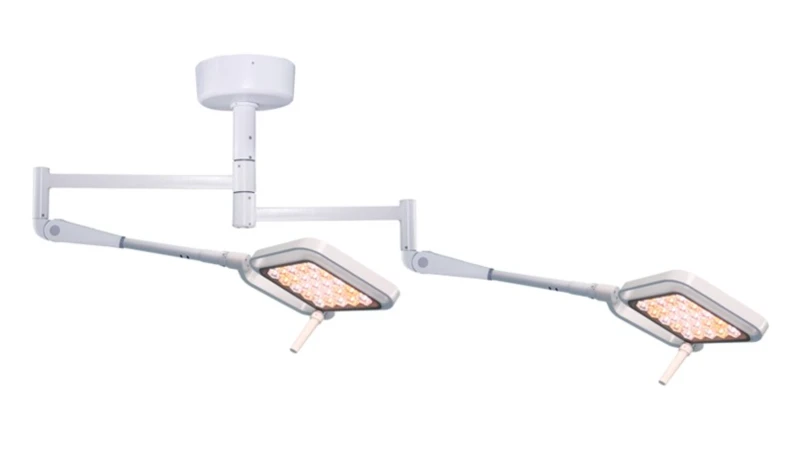
Surgical lights are ceiling-mounted surgical lights permanently installed above the surgical area.
They provide a professional cleaning solution for dedicated operating rooms and procedures.
Advantages include:
- Flexible placement
- No floor space required
- Easy access to the operating area
- Suitable for dedicated operating rooms
- Professional clinical image
Ceiling-mounted systems are particularly useful for veterinary hospitals that frequently perform or conduct complex surgeries.


Wall-mounted surgical lights are installed directly on the wall and are very useful when ceiling mounting is impractical or when additional lighting is needed.
Wall-mounted surgical lights are suitable for a variety of veterinary clinic environments, especially:
- Routine examination rooms
- Animal treatment rooms
- Small surgical areas
- Compact veterinary clinics
- Locations with a lot of floor equipment or limited available space
This installation method allows the light fixture to be fixed to the wall, providing the necessary focused lighting for examination and treatment areas, while reducing the footprint of floor equipment, making the clinic space more organized, and facilitating movement and operation for medical staff.
The Veterinary Standing Surgery Lamp offers greater mobility.
They can be moved between rooms or placed where additional lighting is needed. This is particularly useful for veterinary clinics that require a single lighting system to serve multiple surgical areas.
Potential advantages include:
- Mobility
- Flexible placement
- No need for permanent ceiling installation
- Easy relocation
- Suitable for multiple treatment areas
Floor-mounted systems are especially useful for clinics requiring flexibility or rooms where ceiling-mounted equipment is not suitable.

Surgical lights and examination lights
lthough both surgical lights and examination lights are designed to improve visibility, their uses are slightly different.
Surgical Examination Lamp
Examination lights are typically designed for routine patient examinations and minor surgeries.
They can be used for:
- Physical examination
- Wound assessment
- Minor surgery
- Dental examination
- General treatment
- Outpatient surgery


Surgical Lights
Surgical lights are primarily designed for surgical procedures and other medical operations that require precise, focused illumination. Compared with general examination lights, they place greater emphasis on light intensity, coverage, and adjustability, helping veterinarians maintain a clear view of the operating area throughout a procedure.
Depending on the model and design, surgical lights typically offer the following features:
- Higher illumination intensity: Provides sufficient light for the surgical area, making it easier to examine delicate tissue structures.
- Flexible positioning: Allows the light head to be adjusted according to the surgical site and operating requirements.
- Improved shadow control: Minimizes shadows caused by the veterinarian or surgical instruments blocking the light.
- Wider illumination coverage: Provides adequate lighting for different surgical sites and operating areas.
- Design for surgical environments: Offers features suited to surgical procedures, including stable illumination, convenient operation, and reliable performance.
For veterinary clinics that provide routine examinations, wound treatment, and surgical procedures, using examination lights together with dedicated surgical lights can be a practical solution. This setup meets everyday clinical lighting needs while providing more suitable illumination for procedures that require greater precision.
LED technology has become a popular choice for modern medical and veterinary lighting. Compared with traditional light sources, LED operating lights offer several practical advantages, particularly in environments where clear and consistent illumination is needed for extended periods.
Bright and Consistent Illumination
During veterinary examinations and surgical procedures, uneven or insufficient lighting can make it difficult to see fine details. LED operating lights provide bright, stable illumination to help veterinarians maintain a clear view of the treatment area. The required brightness depends on the type of procedure and the specifications of the lighting system.
Lower Heat Generation
Heat is another factor worth considering, especially during lengthy operations. Compared with many traditional lighting technologies, LED systems generally produce less heat around the illuminated area. This helps reduce unnecessary heat exposure and makes the working environment more comfortable for veterinary staff.
Long Service Life
Frequent light source replacement can be inconvenient for busy veterinary clinics. LED light sources typically have a long service life, reducing the need for regular replacement and helping lower maintenance requirements. Some professional veterinary surgical lights are rated for tens of thousands of operating hours, although actual service life varies depending on the product design and operating conditions.
Adjustable Lighting Settings
Different procedures require different lighting conditions. Many modern LED surgical lights allow users to adjust brightness according to the task at hand. Depending on the model, additional options may include adjustable color temperature and light field size, giving veterinarians more control over the illumination.
Energy Efficiency
LED technology converts electrical energy into light more efficiently than many older lighting technologies. For veterinary clinics that use surgical lights regularly, this can help reduce energy consumption while maintaining the illumination needed for daily clinical work.
Key Features to Consider When Choosing a Surgical Light
Choosing the right surgical light involves more than comparing brightness levels. Buyers should also consider the types of procedures performed and how the equipment will be used in daily practice. Here are eight key features to look at:
- Illumination Intensity: The light should provide sufficient, stable illumination and ideally offer adjustable brightness to meet different surgical requirements.
- Shadow Reduction: A good surgical light should minimize shadows caused by the veterinarian or surgical instruments, keeping the operating area clearly visible.
- Color Rendering: Check the Color Rendering Index (CRI) to ensure that tissues and other details appear as natural and accurate as possible.
- Flexible Positioning: The light head should be easy to move and adjust, allowing users to direct the light precisely where it is needed.
- Light Field Size: Adjustable light field size helps accommodate different surgical sites and working areas.
- Cleaning and Maintenance: Choose a design with surfaces and handles that are easy to clean, and make sure the equipment meets the clinic's cleaning and disinfection requirements.
- Mounting Options: Depending on the operating room layout and available space, consider ceiling-mounted, wall-mounted, or mobile floor-standing surgical lights.
- Ease of Use: Controls should be simple and intuitive, while the light should be easy to reposition and adjust, especially during lengthy procedures.
When comparing surgical lights, consider these features alongside your clinic's surgical needs, room layout, and budget rather than focusing solely on higher specifications.
How to Choose the Right Surgical Light for Your Veterinary Clinic
Choosing a surgical light starts with understanding the procedures your clinic performs and the layout of your operating room. Veterinary facilities of different sizes may have different requirements for brightness, mounting options, and flexibility.
Before making a purchase, consider the following questions:
1. What Types of Procedures Do You Perform?
If your clinic mainly handles routine examinations and minor treatments, basic clinical lighting may be sufficient. However, if you regularly perform orthopedic surgery, soft tissue procedures, dental surgery, or emergency operations, you will need a more specialized surgical light with reliable illumination and suitable light coverage.
2. Which Mounting Option Suits Your Operating Room?
Check the ceiling height, available wall space, operating table position, existing equipment, and power supply before choosing a mounting configuration.
Ceiling-mounted or wall-mounted lights may be suitable for dedicated operating rooms with fixed equipment layouts. If the light needs to be moved between different rooms, a mobile floor-standing system offers greater flexibility.
3. Does the Light Need to Be Easily Adjusted?
During surgery, veterinarians may need to change their working position or viewing angle. Therefore, consider whether the light head can be moved smoothly and whether the direction of illumination can be adjusted quickly without interrupting the procedure.
4. Do You Need Multiple Light Heads?
For larger operating areas or procedures requiring illumination from different angles, a dual-head surgical light may be a better option. Multiple light heads can provide illumination from different directions and help reduce shadows caused by a single light source.
Ultimately, the best surgical light is not necessarily the one with the highest specifications or the highest price. It is the one that meets your clinic's surgical needs, fits the available space, and allows veterinary staff to work comfortably and efficiently.
Common Mistakes When Shopping for Surgical Lights
Picking the right surgical light goes far beyond simply comparing price tags.
- Buying based on price alone Budget is certainly a factor, but the lowest-priced option often lacks the features your clinic really needs. Always weigh intended use, build quality, available configurations, installation needs and long-term value.
- Focusing solely on brightness A bright output is essential, yet good surgical lighting is about much more. Shadow management, colour rendering, positioning ease and field of view all matter just as much.
- Picking the wrong mounting style Ceiling-mounted units are not a fit for every treatment room, and mobile floor lights can take up valuable floor space. Assess your room layout first before locking in a configuration.
- Overlooking future growth Your clinic may expand its surgical services down the line. Check whether the lighting system can scale and keep up as your practice grows.
- Ignoring your team's workflow Veterinarians and technicians need to adjust the light easily mid-procedure. Even a high-tech system is a poor fit if it proves cumbersome to operate.
How Much Do Surgical Lights Cost?
Surgical light pricing varies significantly, driven by configuration, lighting technology, mounting type, specifications, installation needs and extra features.
There is a huge gap in cost between basic mobile exam lights and fully fitted ceiling-mounted surgical lighting systems.
Key factors that affect the price:
- LED technology
- Light intensity
- Number of light heads
- Mounting style
- Arm construction and design
- Range of adjustability
- Colour temperature control
- Light field adjustment
- Integrated camera or video recording
- Installation complexity
- Optional accessories
When you compare surgical lights for sale, don't look only at the price tag. Take time to review specs and configurations side by side.
Our professional veterinary surgical lights come in a full range of options, including ceiling-mounted, wall-mounted and mobile units.
Frequently Asked Questions About Surgical Lights
1. What Are Surgical Lights Used For?
Surgical lights are designed to provide focused illumination during surgical procedures and other medical treatments. They help veterinarians see the operating area more clearly while minimizing shadows that may interfere with their work.
2. Are LED Surgical Lights Suitable for Veterinary Clinics?
Yes. LED surgical lights are widely used in veterinary facilities because they offer bright, consistent illumination, a long service life, and relatively low heat generation. They are suitable for both routine clinical procedures and surgical applications, depending on the model.
3. What Is the Difference Between a Surgical Light and an Examination Light?
Examination lights are mainly used for routine checkups, wound treatment, and minor procedures. Surgical lights are designed for operations that require more focused, powerful, and controlled illumination.
4. Which Is Better: Ceiling-Mounted or Mobile Surgical Lights?
It depends on the clinic's layout and how the equipment will be used. Ceiling-mounted surgical lights are a practical choice for dedicated operating rooms, while mobile floor-standing lights offer greater flexibility and can be moved between different treatment areas.
5. What Should I Look for When Buying a Surgical Light?
Before purchasing, consider the following factors:
- Illumination intensity and stability
- Shadow reduction performance
- Color rendering index (CRI)
- Light head positioning and adjustability
- Light field size
- Mounting options
- Cleaning and maintenance requirements
- Operating room layout
- Types of surgical procedures
- Future clinical needs
The right choice should meet your current requirements without limiting future clinic development.
6. Can Surgical Lights Be Used for Veterinary Surgery?
Yes. Surgical lights are commonly used in veterinary operating rooms and treatment areas. The key is to select a model with specifications and mounting options that match the intended procedures and clinical environment.
Creating a Well-Equipped Veterinary Operating Room
Surgical lighting is only one part of a functional veterinary operating room. Depending on the procedures and services offered, a veterinary clinic may also need:
- Veterinary X-ray systems
- Digital X-ray detectors
- Veterinary ultrasound systems
- Veterinary anesthesia machines
- Veterinary operating tables
- Veterinary weighing scales
- Microscopes
- Laboratory equipment
- Medical and veterinary supplies
Rather than purchasing equipment separately without considering how it will be used, veterinary clinics should look at the entire clinical workflow. Matching the right equipment to the available space and daily procedures helps create a more organized, practical, and efficient environment for veterinary diagnosis and surgery.
In conclusion
Choosing the right surgical lights is a crucial decision for veterinary clinics, hospitals, and animal health facilities.
The ideal lighting solution depends on the procedures your team performs, the size and layout of the room, the frequency of equipment use, and whether you require a ceiling-mounted, wall-mounted, or portable system.
When comparing surgical lights, don't just look at brightness and price. Also consider lighting quality, shadow reduction, color rendering index, location, ergonomics, cleaning requirements, installation, and long-term availability.
With the right lighting system, veterinary professionals can create a more well-lit workspace for examinations, procedures, and surgeries.

Looking for surgical lights for your veterinary clinic?
If you are looking for surgical lights, examination lights, LED medical lighting, or other equipment for your veterinary clinic, Shanghai Fangzheng Medical Equipments Co., Ltd. can help you explore options suitable for your clinical environment.
Contact Shanghai Fangzheng Medical Equipments Co., Ltd. to discuss surgical lighting and other veterinary equipment suitable for your clinic or hospital.
Send Inquiry