


Top 5 Benefits of Using a Pet Operation Lamp Headlight in Veterinary Clinics
Mar 11, 2026
Leave a message
As veterinary medicine continues to evolve, many clinics are investing in advanced equipment such as imaging systems, monitoring devices, and minimally invasive surgical tools. However, in everyday clinical work, some of the most impactful improvements often come from smaller, practical tools that directly enhance how procedures are performed.
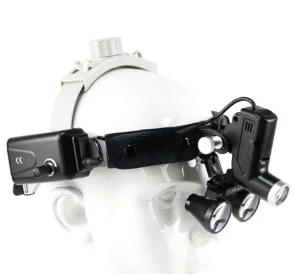
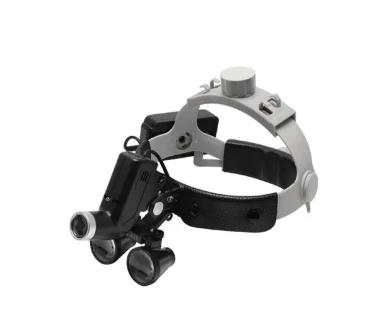
One such example is the Pet Operation Lamp Headlight.
Many veterinarians share a similar reaction after using one for the first time:
"I didn't realize how much lighting affects clinical performance."
A Pet Operation Lamp Headlight is not just an extra light source - it changes visibility, posture, efficiency, and even treatment precision in meaningful ways.
Let's take a closer look at the five most practical benefits from a real clinical perspective.
Precision Lighting That Turns Assumption Into Clear Visibility
Veterinary procedures often involve:
- Small operating areas
- Delicate tissue structures
- Unpredictable patient movement
For example:
- Treating feline gingivitis
- Examining narrow ear canals in small dogs
- Suturing periocular wounds
Traditional overhead surgical lights illuminate the environment - not the exact point of focus.
A Pet Operation Lamp Headlight provides:
- Line-of-sight illumination
- Reduced shadow interference
- Improved deep-structure visibility
Wherever the veterinarian looks, the light follows.
This is particularly valuable in:
- Pet dental procedures
- Small animal ophthalmic exams
- Fine dermatological treatments
Instead of relying heavily on tactile feedback or experience alone, clinicians can directly visualize details - improving diagnostic confidence and reducing the risk of misjudgment.
Better Ergonomics and Reduced Physical Strain
Veterinarians frequently need to:
- Bend forward
- Tilt their head
- Adjust posture to "catch the light"
Over time, this can contribute to:
- Neck strain
- Shoulder fatigue
- Postural stress
With a Pet Operation Lamp Headlight, the light source moves with the clinician's head.
This allows veterinarians to:
- Maintain natural working posture
- Reduce unnecessary body adjustments
- Sustain comfort during longer procedures
This ergonomic advantage becomes especially noticeable during:
- Soft tissue surgeries
- Wound management
- Precision suturing
From an occupational health perspective, this type of hands-free veterinary surgical lighting can significantly reduce long-term strain.
Improved Outcomes in Deep or Minimally Invasive Procedures
As veterinary care advances, clinics are increasingly performing:
- Minimally invasive surgeries
- Deep wound treatments
- Localized tissue repairs
One of the biggest challenges in such procedures is shadowing.
Even high-quality overhead surgical lamps may struggle to illuminate deeper cavities.
A high-intensity Pet Operation Lamp Headlight provides:
- Directed illumination
- Deep penetration
- High color rendering
This is particularly useful for:
- Minimally invasive small animal procedures
- Deep ear canal assessments
- Posterior oral treatments
Better lighting helps:
- Reduce tissue damage
- Improve surgical precision
- Shorten operation time
In many clinics, it is becoming a standard tool for fine surgical work.

Greater Efficiency With Less Reliance on Assistants
In traditional setups, veterinarians often rely on assistants to adjust lighting.
But assistants are usually occupied with:
- Restraining the animal
- Preparing instruments
- Recording information
Using a Pet Operation Lamp Headlight allows veterinarians to independently control lighting direction.
This is especially helpful during:
- Night emergencies
- Single-doctor shifts
- Procedures in compact treatment rooms
No interruptions, no repeated requests.
This autonomy improves:
- Workflow continuity
- Treatment speed
- Emergency responsiveness
For small to mid-sized clinics, this is a practical way to enhance operational efficiency.

Enhanced Professional Image and Client Confidence
Beyond technical advantages, there is also a perceptual benefit.
Pet owners often assess medical quality based on visual professionalism.
When a veterinarian uses a Pet Operation Lamp Headlight during:
- Oral examinations
- Wound treatments
- Precision procedures
It conveys:
- Preparedness
- Attention to detail
- Clinical precision
This strengthens trust and reinforces the perception of high-standard care.
In an increasingly competitive veterinary market, such subtle improvements can contribute to differentiation.
More Than Lighting - A Clinical Capability Enhancer
Today, the Pet Operation Lamp Headlight is no longer just a supplementary light source.
It has become:
- A visual support system
- A precision aid
A key component of modern veterinary surgical lighting solutions
Whether used in:
- Pet dental illumination
- Small animal surgical assistance
- Fine suturing procedures
Its role is being increasingly recognized.
Conclusion
Modern veterinary upgrades are no longer about simply acquiring larger or more complex equipment - but about tools that genuinely improve clinical performance.
The Pet Operation Lamp Headlight is a perfect example.
Though simple in form, it can influence:
- Diagnostic accuracy
- Operator comfort
- Workflow efficiency
- Client confidence
For clinics aiming to elevate care quality, it often represents a meaningful step toward precision veterinary medicine.
Send Inquiry