


Pet Cage Selection And Answers To Common Problems Common Problems in The Use Of Pet Crates
Jun 08, 2026
Leave a message
Whether it's a pet hospital, a pet boarding center, or an ordinary pet-owning household, pet cages are an essential daily necessity. However, traditional cages have revealed numerous problems after long-term use, causing considerable distress for many users. When boarding at home, cages sway and locks easily loosen, posing safety hazards; when traveling with pets, ordinary cages are heavy and difficult to move, and have poor ventilation; during the recovery period for sick or post-surgery pets, conventional cages cannot regulate temperature and humidity, lack oxygen supply, and fail to meet special care needs. These various pain points in different scenarios have prompted people to differentiate between different types of cages based on their intended use and choose suitable professional products.
Core pain points in different scenarios
Based on three main scenarios-home, travel, and medical care-the pain points of pet cage usage each have their own focus and can be categorized as follows:
Home Boarding Scenarios
Most ordinary cages are made of thin materials, easily deformed by pets' collisions, and have sharp edges that can easily scratch them; there are blind spots when cleaning excrement, making it difficult to thoroughly remove stains and bacteria, and long-term use can easily breed odors; some cages have simple door lock designs, allowing active pets to pry open the cage door themselves, posing an escape risk.
Travel Scenarios
Traditional metal cages are large and heavy, making loading and transporting them very difficult; the lack of a fixed structure allows the cage to slide during vehicle movement, easily frightening the pet; inadequate ventilation makes the enclosed space stuffy and hot, causing strong stress reactions in pets during long journeys.
Medical Care Scenarios
Sick, post-operative, or breathing-impaired pets require a dedicated environment with constant temperature, oxygen supply, and isolation. Ordinary cages lack temperature control and oxygen supply functions; the space is fixed and cannot be expanded, and they lack professional protective and leakage protection devices, making them unsuitable for clinical care requirements.
Professional cages that specifically address pain points

Sturdy Dog Crates: Your Top Choice for Home Boarding
Sturdy Dog Crates are designed for durability and sturdiness, making them ideal for everyday boarding in homes and pet stores. Constructed from high-quality stainless steel with robust welding, the cages are structurally stable and resistant to wobbling. Rounded corners prevent injuries from bumps and knocks, while the detachable design simplifies cleaning and disinfection. Each Sturdy Dog Crate features a magnetic one-handed lock for secure locking and easy opening. Optional accessories such as drainage holes and transparent observation doors are also available to meet basic needs for daily feeding and temporary isolation.
For outings, a pet car cage is an excellent choice. Made of aerospace-grade aluminum alloy, it's lightweight yet structurally strong. The product folds up for easy storage, saving space. Assembly and disassembly require no tools. The dense mesh design ensures ventilation, while the non-slip bottom and fully sealed base prevent the cage from shifting in the car and collect pet waste, keeping the vehicle clean. This pet car cage is perfectly suited for road trips, veterinary visits, and other similar scenarios, making traveling with your pet easier and more worry-free.

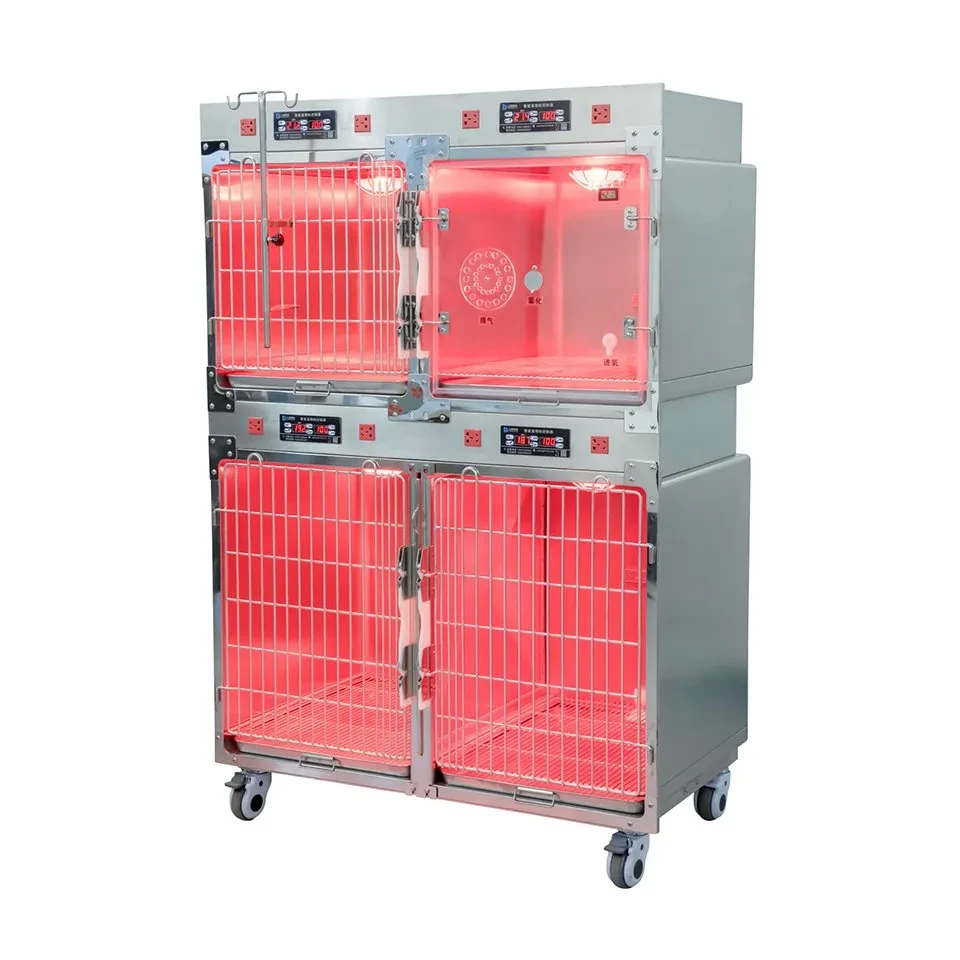
Medical and nursing use: insulated oxygen chamber cage
Designed for professional institutions such as veterinary hospitals and rehabilitation centers, the insulated oxygen chamber cage is a specialized device for the recuperation and isolation care of sick pets. The cage boasts excellent pressure resistance and integrates professional functions such as temperature control, leakage protection, and oxygen supply. Its automatic push-pull door lock ensures safe and convenient use. The double-layered, split structure with a pull-out panel allows for flexible expansion of the internal space, while casters at the bottom facilitate transport within the facility. The device also includes a wet and dry thermometer, warm light fixtures, and multiple power interfaces, offering comprehensive functionality. The insulated oxygen chamber cage can simultaneously meet clinical needs such as constant temperature recuperation, oxygen therapy, and isolation observation, making it a commonly used piece of equipment in veterinary institutions.
Choose according to your needs and protect pet safety scientifically
There is no single best pet cage, only the right one for the right situation. Home boarding prioritizes sturdiness, durability, and ease of cleaning; travel prioritizes portability, ventilation, and secure containment; and medical care requires specialized functions such as temperature control and oxygen supply. These three products precisely address different usage scenarios, resolving various pain points of traditional cages. Choosing a cage based on your actual needs for pet care, travel, and veterinary treatment reduces daily maintenance workload and creates a safe and comfortable space for your pet, making every cage-keeping experience more reassuring.
Send Inquiry