


The Glare From Abdominal Surgery on Obese Dogs and Cats Can be Blinding. How can we Avoid the Pitfalls of Using Surgical Lights in Veterinary Surgery?
Jun 30, 2026
Leave a message
Why is glare from abdominal surgery in obese dogs and cats a frequent problem?
In daily practice, abdominal surgery in overweight dogs and cats is consistently a major visual challenge for veterinarians. Obese animals have large amounts of fat deposits in their abdominal cavities, and the surface of this fat, peritoneum, and organs all have a moist, reflective layer. When a single-headed surgical lamp shines vertically, the light creates a large area of mirror-like reflection in this moist tissue, resulting in a completely white, unfocused field of vision. Blood vessels, bleeding points, and the boundaries of small organs are all blurred. Many clinics use basic single-headed upright lamps, which have a single light source angle. Even slight obstruction from instruments or arms creates heavy shadows, forcing veterinarians to constantly lower their heads and adjust their position. Prolonged exposure to strong glare can also cause dry eyes and blurred vision, increasing the risk of surgical errors. This is especially true for delicate procedures such as minimally invasive surgery, sterilization, and removal of abdominal masses, where the blind spots created by the reflections greatly increase the risk of accidentally injuring blood vessels.
Key points for avoiding pitfalls when purchasing: Solving reflection and glare issues through parameters
When selecting a surgical light suitable for abdominal surgery in obese dogs and cats, brightness should not be the only factor considered. These indicators directly determine the effectiveness of glare control:
Dual-head, multi-angle lighting
Prioritize the dual-disc ceiling-mounted model, where dual light sources project light from different angles at varying heights, offsetting the specular reflection from the fat surface and preventing direct, strong light from creating reflective bands. The Vet Double Dome Ceiling Operation Light is specifically designed for deep abdominal cavities and areas with significant fat deposits.
High color rendering index (R9)
Choose a model with Ra≥95 and R9≥90. Strong red color reproduction ensures clear differentiation of bruising, healthy blood vessels, and adipose tissue even with slight reflections, preventing the appearance of pale, indistinguishable blood.
Deep illumination + adjustable spot size
Reaches an abdominal cavity depth of up to 1300mm, with an adjustable spot size range of 110-190mm, adaptable to different sizes of abdominal openings in overweight dogs and cats. Light is evenly distributed throughout the cavity, reducing localized highlights and reflections.
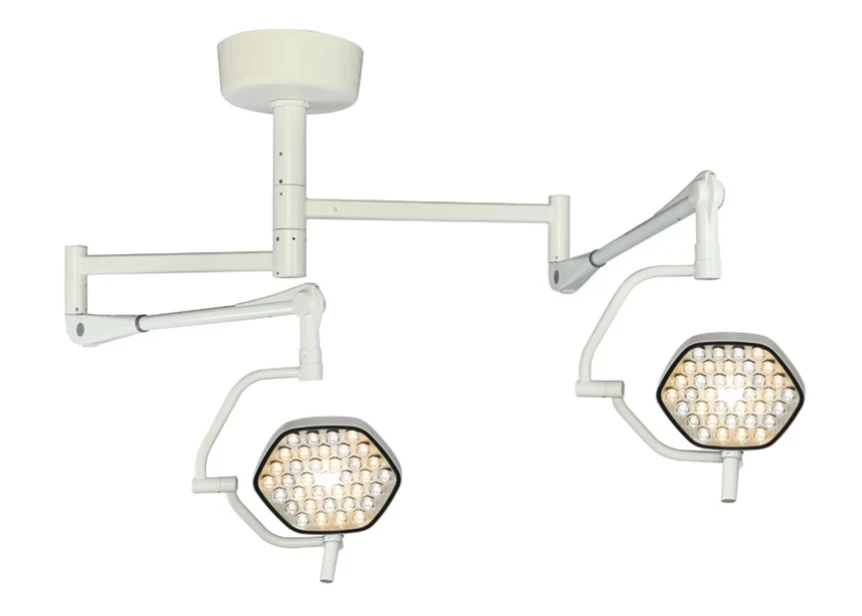
Vet double dome ceiling operation light, a practical model suitable for obese laparoscopic surgery
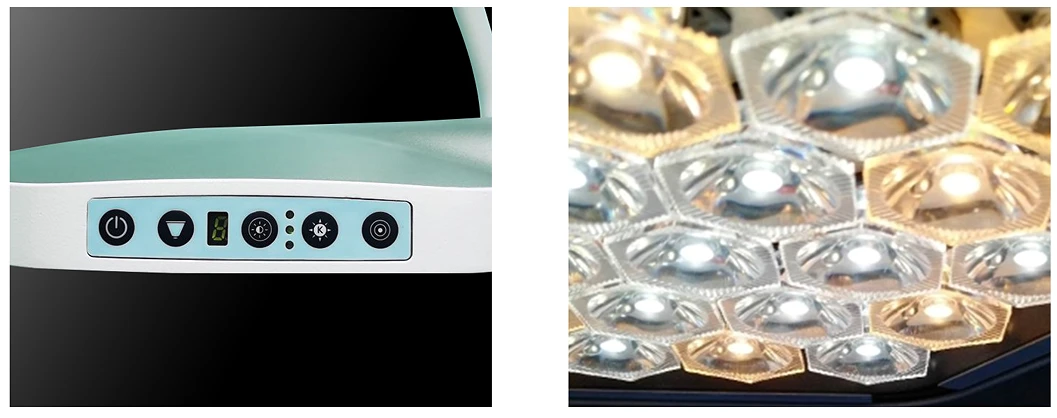
This vet double dome ceiling operation light is designed specifically for small to medium-sized veterinary hospitals, perfectly addressing the issue of glare in the abdominal cavity of obese dogs and cats. Its installation height is adapted to the standard 2800-2900mm ceiling height of typical pet operating rooms. Each of the two light panels contains 37 LEDs, with alternating light sources to minimize mirror reflections. The overall illuminance reaches 110,000 Lux, with a depth of 1300mm, ensuring no dark corners even in the deep abdominal cavity. Equipped with a self-developed high thermal conductivity aluminum alloy heat dissipation structure, the light body maintains a low temperature during prolonged surgery, preventing the drying of adipose tissue and increased glare due to bleeding. The device features a one-button endoscopy mode, allowing switching between laparoscopic and open surgery to reduce glare interference from organ surfaces. The remote control panel allows for quick adjustment of the light spot, color temperature, and brightness, eliminating the need for repeated lamp movement during surgery and ensuring stable and continuous illumination of the surgical area.
Practical tips to reduce intraoperative glare interference
Besides choosing the right equipment, daily operation can also reduce glare. First, adjust the angle of the dual lamp heads, staggering the main and auxiliary lights to avoid both beams hitting the same reflective fat surface simultaneously. Second, when dealing with the abdominal cavity of large animals, use a neutral color temperature of 4400K to balance tissue color and reflectivity; it is not recommended to use cool white light throughout the procedure. Third, during surgery, lightly cover large areas of the fat surface with damp gauze to reduce specular reflection, and use level 8 dimming to appropriately lower the central illuminance, balancing clarity and visual comfort. Fourth, clean the lamp lens regularly; dust and disinfectant residue can cause light scattering, exacerbating glare.
Avoid the pitfalls of low-priced single-lamp treatments; dual-light sources are the optimal solution for laparoscopic surgery
Many small clinics purchase single-head simple surgical lights to compress budgets. In the short term, they may appear to be saving money, but in the long term, due to reflection and unclear vision, the operation time is lengthened, increasing risks for both doctors and patients. Intraperitoneal surgery for obese dogs and cats requires higher light sources from multiple angles, deep cavity lighting, and high color rendering. The double-disc ceiling shadowless lamp relies on multi-dimensional light to offset reflections and is a necessary equipment for specialized hospitals to upgrade operating rooms. When purchasing, focus on checking the three core parameters of the dual-lamp structure, R9 color rendering, and lighting depth. Mature dual-lamp models like the vet double dome ceiling operation light can significantly reduce the problem of intraoperative glare from the hardware level, reduce veterinarian visual fatigue, and improve the accuracy and safety of abdominal surgery operations.
Send Inquiry