


How to Choose a Veterinary Clinic Table? This Article Will Provide the Answer
Jul 14, 2026
Leave a message
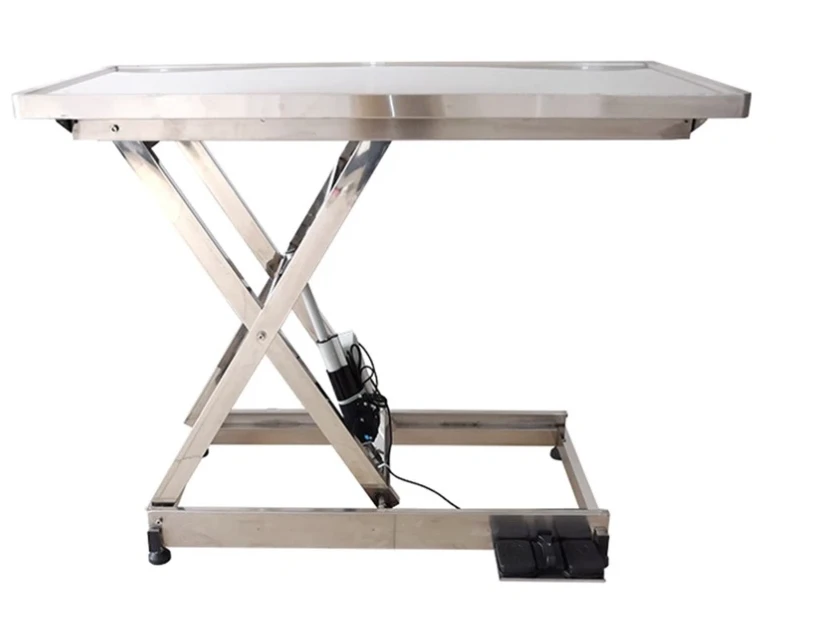
In daily veterinary care, the animal exam table is a core component for patient reception, physical examinations, wound care, and intravenous monitoring. Years of frontline work have instilled in veterinarians clear and stringent standards for examination tables: easy-to-clean surfaces to prevent cross-infection, highly ergonomic design, robust and load-bearing structure, and flexible and expandable functionality. Inferior examination tables not only increase the risk of strain on medical staff but also easily cause stress in pets and can lead to nosocomial infections due to inadequate cleaning. An examination table tailored to clinical needs can significantly improve clinic operational efficiency. This article focuses on the real-world needs of veterinarians, introducing the animal exam table and comprehensively addressing various pain points in veterinary care.
Veterinarians' primary concern: hygiene and ease of cleaning, and strict control of cross-infection within the hospital
During the examination process, animal bodily fluids, stains, and disinfectants frequently come into contact with the work surface. Veterinarians' primary requirement is a material that is corrosion-resistant and free of unsanitary corners. Traditional wooden and ordinary metal work surfaces trap dirt and grime in their crevices, making thorough disinfection difficult and easily leading to the cross-infection of skin diseases and infectious diseases in cats and dogs. The Animal Exam Table features a full stainless steel work surface with rounded edges, eliminating sharp corners and allowing for easy wiping and rinsing. Repeated wiping with alcohol and chlorine-based disinfectants will not corrode or rust, perfectly meeting the high-frequency disinfection needs of veterinarians. The rounded, anti-collision edges also prevent injuries to restless pets, balancing hygiene and animal safety, and reducing the risk of infection in the clinic from the source.
Veterinarian's second requirement: Highly adjustable, balancing ergonomics and animal care
Prolonged bending and lifting of large dogs is a major cause of lumbar muscle strain for veterinarians and their assistants, making an electric height adjustment system essential. Fixed-height examination tables require bending over when handling small cats and struggling to lift large dogs, resulting in a poor user experience. This examination table features an electric foot-operated height adjustment system, freely adjustable from 45cm to 100cm. The lower position facilitates lifting and placing large pets, while the raised position allows veterinarians to stand without bending over, maintaining a comfortable posture during long consultations, wound care, and ultrasound examinations, reducing occupational injuries. The device supports an optional built-in battery, allowing for normal height adjustment even in power outages, ensuring uninterrupted patient care and suitable for 24/7 continuous service.
Veterinarians' third requirement: Stable structure with high load-bearing capacity, safely handling pets of all sizes
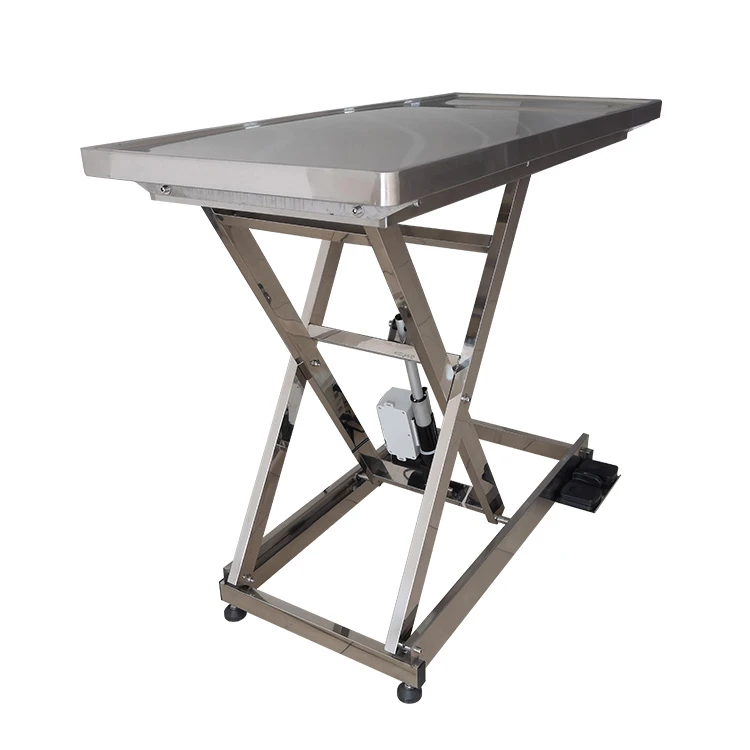
The animal examination table cats, medium-sized dogs, and large, aggressive dogs are all treated here. Veterinarians require a sturdy, non-slip, and stable support frame to prevent the table from tipping over when animals struggle. The Animal Exam Table features a thickened stainless steel support frame with excellent load-bearing capacity and stable, wobbly operation. It can be equipped with non-slip, telescopic rubber feet and optional silent casters, ensuring safe placement during treatment or movement between examination rooms. Whether performing a physical examination, wound dressing, or pre-operative skin preparation, even if the pet struggles violently, the table will not shift or slip, guaranteeing the safety of both medical staff and the animal.
The fourth requirement for veterinarians: Modular functionality and multiple accessories to adapt to diverse treatment scenarios
Pet hospitals have complex functions, requiring examination tables to handle physical examinations, IV infusions, wound treatment, and patient reception. Veterinarians expect equipment with flexible expandable accessories, allowing one unit to serve multiple purposes and reduce procurement costs. This examination table supports a wide range of optional accessories: a tilting tabletop, IV poles, a tissue tray, and casters to fully cover treatment needs. The IV poles provide stable support for IV bottles, the tilting tabletop facilitates wound drainage, and the tissue tray stores consumables, eliminating the need for additional shelves. The standard 130cm x 60cm tabletop size provides ample space, and a single unit covers the entire process of consultation, diagnosis, wound treatment, and postoperative observation. Small and medium-sized clinics do not need multiple units, saving examination room space.
Product overview: Animal exam table compatible with various pet medical institutions
The Animal Exam Table is designed specifically for pet hospitals. Its standard dimensions are L130W60H45-100cm, compatible with 100V-240V universal voltage. The electric foot pedal height adjustment makes operation simple, allowing even novice veterinarians to quickly learn how to use it. The all-stainless steel body is durable, and its rounded anti-collision design, non-slip support structure, and expandable accessories combine multiple advantages to precisely meet veterinarians' needs for hygiene, labor-saving, safety, and multi-functionality.
In the modern pet medical industry, the practicality of diagnostic equipment directly determines the efficiency of patient care. The Animal Exam Table is no longer just a simple storage platform, but an integrated diagnostic tool that fits the working habits of veterinarians while ensuring the safety of both humans and pets. From four dimensions-cleanability, height adjustment, load-bearing capacity, and expandable functions-it fully responds to the core usage needs of frontline veterinarians, adapting to various pet clinics and animal hospitals. It provides a stable and reliable operating platform for daily checkups, wound treatment, and post-operative care, effectively optimizing the diagnostic process and reducing the workload of medical staff.
Send Inquiry