


Electric Vs Hydraulic Veterinary Table: Which One Is Better for Your Practice?
Sep 11, 2026
Leave a message

When browsing veterinary table suppliers, most clinic owners will eventually face a core choice: electric lifting veterinary table or hydraulic veterinary table. Both are mainstream lifting-type vet tables on the market, but they differ greatly in lifting stability, service life, noise level, maintenance cost, and applicable scenarios.
Many procurement managers simply choose according to initial price, only to find later that frequent failures, loud noise, or insufficient load capacity seriously affect daily diagnosis and surgical efficiency. To help you make a cost-effective long-term decision, we will break down the real differences between electric veterinary table and hydraulic veterinary table based on actual clinic operation experience.
Basic Working Principle Difference
An electric veterinary table relies on a high-quality electric motor and transmission structure to achieve precise height lifting. The lifting process is uniform, sensitive, and easy to operate with one-touch control. It is designed for frequent, daily, high-frequency lifting scenarios.
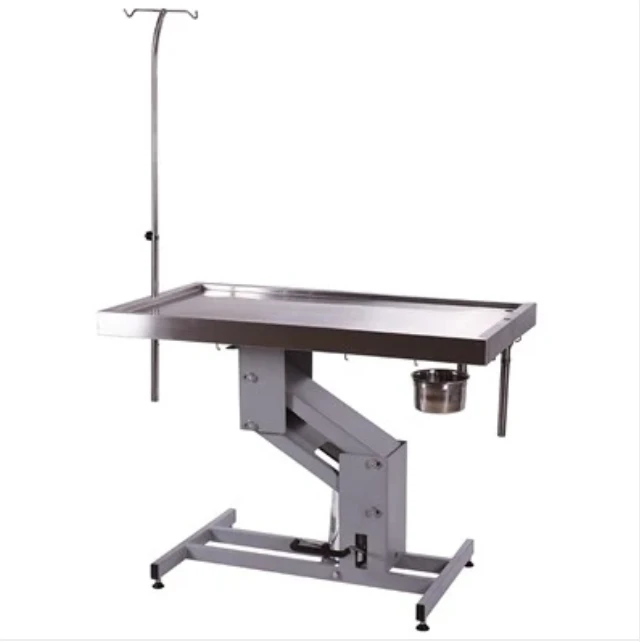
A hydraulic veterinary table uses hydraulic pressure to drive lifting. It features strong bearing capacity, powerful lifting force, and extremely stable support, making it more suitable for heavy-load scenarios such as large animal examination and long-duration surgery.
Comprehensive Comparison: Electric vs Hydraulic Veterinary Table
Lifting Stability and Smoothness
Electric vet tables lift smoothly with slight speed changes and perform well in fine height adjustment, which is very friendly for routine examination, vaccination, and daily pet care. The whole process is stable without jitter.
Hydraulic vet tables have stronger overall stability under heavy load. When placing large animals or performing long surgical operations, the table body will not shake easily, providing safer surgical conditions.
Noise and Clinic Environment Adaptability
Electric lifting systems run with low noise, which will not cause excessive stress and fear for sensitive pets. It is more suitable for pet beauty, pediatric pet examination, and quiet consultation environments.
Hydraulic systems produce slightly more operating noise during lifting, but they have obvious advantages in power and load resistance.
Load Capacity and Usage Intensity
Electric veterinary table is perfect for small and medium-sized pet clinics with conventional load demands and high-frequency daily use. It balances efficiency and durability.
Hydraulic veterinary table is the first choice for high-intensity surgical rooms, large animal diagnosis, and 24-hour emergency hospitals. Its pressure-resistant structure can maintain stable operation under long-term heavy load.
Maintenance Cost and Service Life
Electric tables have simple structure, fewer wearing parts, and low daily maintenance difficulty. As long as the motor is guaranteed with qualified quality, the failure rate is extremely low in daily use.
Hydraulic tables need regular inspection of hydraulic oil and sealing parts. Although the structure is durable, long-term high-load operation requires routine maintenance to avoid oil leakage and pressure loss.
Price and Cost Performance
Electric veterinary tables have moderate overall cost and high comprehensive cost performance, suitable for most conventional clinics.
Hydraulic veterinary tables have higher configuration and higher unit price, but they are irreplaceable in high-standard surgical scenarios.
Which One Should You Choose for Your Clinic?
Choose Electric Veterinary Table If:
- Your clinic focuses on daily physical examination, vaccination, and routine treatment
- Most customers are small and medium-sized pets
- You require low noise, convenient operation, and low maintenance pressure
- You pursue high daily work efficiency

Choose Hydraulic Veterinary Table If:
- Your hospital undertakes a large number of surgical operations
- You need to treat large-breed dogs or medium-sized animals
- The equipment needs to bear long-term and high-intensity work
- You need ultra-stable table support during complex surgery
Industry Hidden Tips: Many Clinics Match Both Types
In high-standard comprehensive animal hospitals, the common matching method is to deploy electric veterinary table in the consultation room for daily high-frequency use and place a professional hydraulic veterinary operating table in the operating room. This collocation maximizes operational efficiency and surgical safety, which is also the most recognized equipment solution by professional veterinary institutions.
There is no absolute "better" between electric and hydraulic veterinary table. The core of selection is matching your actual business scenarios, patient groups, and service grades. Daily routine examination pursues efficiency and convenience, while surgical scenarios pursue stability and safety.
Veterinary Equipment Solution Page Need professional matching suggestions for your clinic layout? Visit our to view detailed parameters, case references, and custom service support. Submit an inquiry now to get a free clinic equipment configuration plan and competitive bulk price.
Send Inquiry