


Don't Let the Main Light Leave Blank ! Pet Surgery Auxiliary Lighting, Precisely Illuminating Deep Details
Apr 15, 2026
Leave a message
In a pet operating room, the main light is the core support for the surgical field of vision, but it often has an easily overlooked shortcoming-it cannot provide adequate illumination for deep details. Whether it is cavity surgery in small dogs and cats, deep wound debridement, or exposure of delicate blood vessels and nerves, although the main light is bright enough, it is difficult to penetrate deep into the surgical area, resulting in blind spots. This has become a core problem that plagues pet medical staff and indirectly affects the accuracy of surgical procedures.
1. The main light has blind spots, making it difficult to see deep details
The precision of veterinary surgery often depends on the control of deep details. While many veterinary hospitals' main lights provide general illumination, their light penetration is insufficient, failing to create a clear view of deep surgical areas, cavities, or hidden locations, easily leading to shadows and blind spots. Medical staff may struggle to discern the direction of deep blood vessels and tissue boundaries, not only prolonging the procedure but also potentially causing errors due to blurred vision, increasing surgical risks.
2. The main light's brightness is not adjustable, and the auxiliary lighting is inadequate
Different pet surgeries and different surgical areas require different auxiliary lighting. The main light has a fixed brightness and cannot be flexibly adjusted to meet the needs of observing deep details. In this case, a dedicated auxiliary light is needed to supplement it. However, ordinary auxiliary lights are either not bright enough to penetrate deep surgical areas, or the light is scattered and interferes with the main light's field of vision, failing to truly play a "supplementary lighting" role and making it difficult to meet the needs of precise operation.
3. The auxiliary lights are inconvenient to operate and delay the surgical rhythm
During surgery, medical staff need to concentrate on their work, making the ease of use of auxiliary lighting crucial. Ordinary auxiliary lights either have inflexible brackets that cannot accurately target deep surgical areas, are inconvenient to move, requiring the operation to be stopped and repeatedly adjusted when changing the angle, or have poor stability, shifting with the slightest touch. Not only do they fail to provide supplemental lighting, but they also distract medical staff and disrupt the rhythm of the surgery.
-
Dedicated auxiliary lights: fill in the gaps left by the main lights and precisely illuminate deep details
For auxiliary lighting during pet surgery, there's no need to replace the main light; simply fill in the main light's blind spots and illuminate deep details that the main light can't reach. The veterinary spotty exam light was created to address this core need and is specifically designed for auxiliary lighting during pet surgery.
-
High-brightness focused light precisely penetrates deep surgical areas
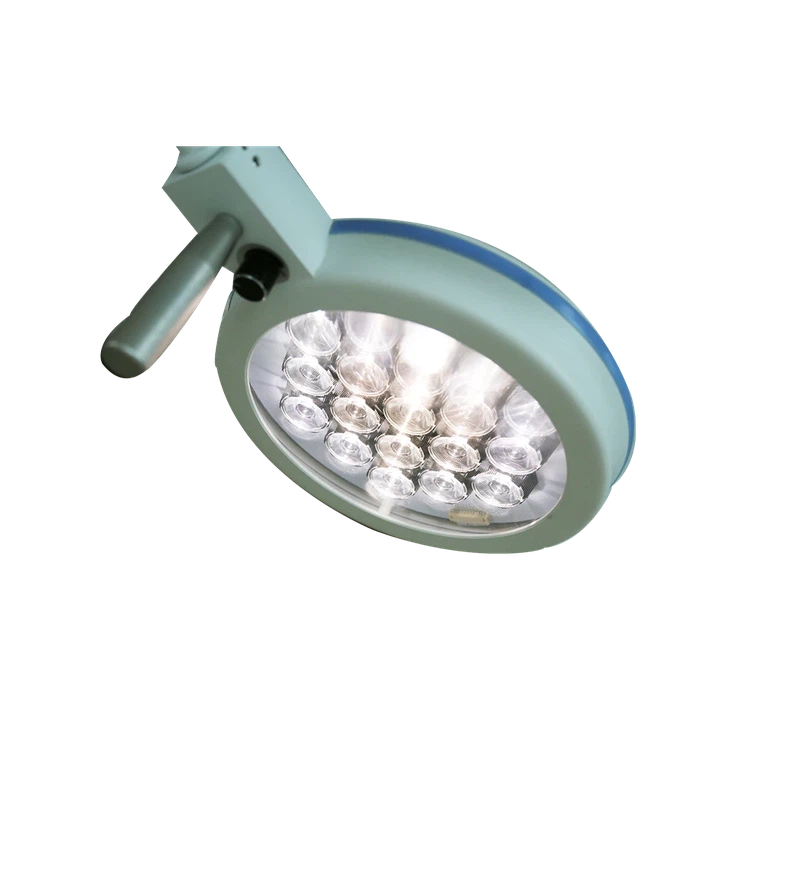
This veterinary spotty exam light uses Osram LEDs to provide a high-brightness, high-color-rendering focused light field. The concentrated light has strong penetrating power, allowing precise targeting of deep surgical areas and hidden sites that the main light cannot reach. It minimizes shadows, clearly restores the natural color and details of tissue, and enables medical staff to clearly distinguish deep blood vessels, nerves, and tissue boundaries, easily overcoming the problem of blind spots in main light illumination. At the same time, the lamp generates low heat, so prolonged supplemental lighting will not cause the surgical area to dry out, avoiding increased surgical risks.
-
Flexible and convenient, suitable for various auxiliary lighting scenarios
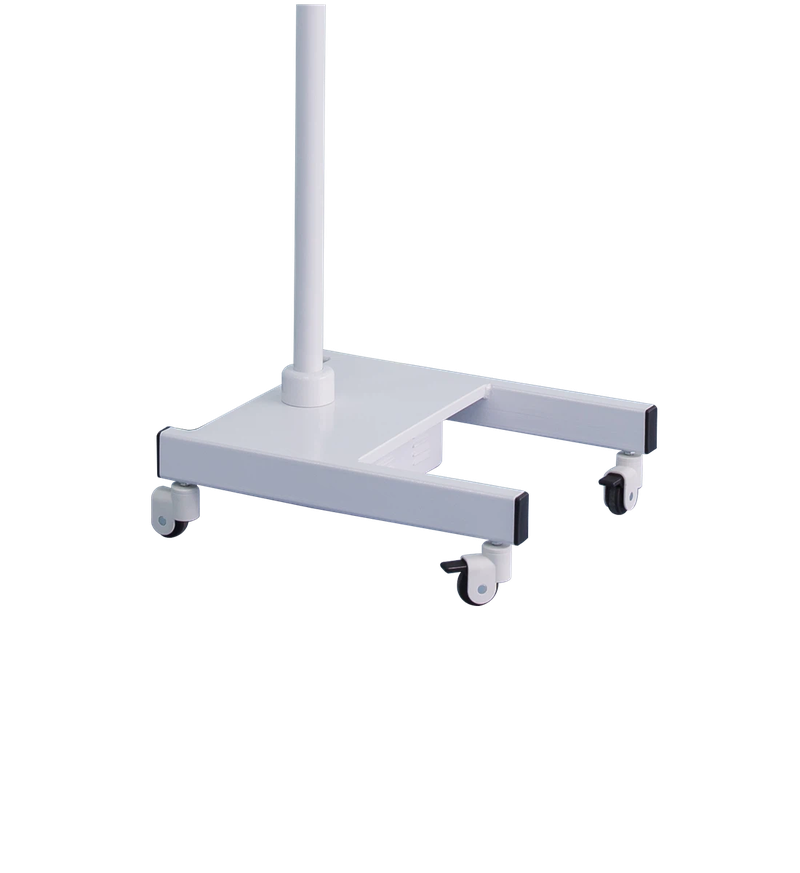
It features an ergonomically designed lamp head with adjustable brightness and angle, allowing medical staff to precisely adjust the lighting angle and brightness according to the surgical site and depth without interrupting their work. This easily adapts to various lighting needs, including those for cavities and deep wounds. The sturdy bracket with omnidirectional casters ensures free and flexible movement, while the low center of gravity guarantees stability. A one-button locking brake function allows the lamp to be precisely positioned for illumination, preventing wobbling or displacement and ensuring it doesn't interfere with the main light's field of vision or surgical procedures.
Simple and practical, it has become a great helper in surgery
As a dedicated surgical auxiliary lighting light, it boasts a simple and aesthetically pleasing structure, is easy to operate, requires no complex adjustments, and can be used immediately, saving surgical preparation time. Unlike the general illumination of the main light, it focuses on supplementary lighting, precisely filling the gaps left by the main light, making every deep detail clearly visible. This helps medical staff improve operational precision, reduces surgical risks caused by blurred vision, and silently safeguards every pet surgery.
Send Inquiry