


A Must-read for Veterinarians
May 12, 2026
Leave a message
In veterinary clinics, ultrasound diagnosis has long been a core tool for abdominal examinations, pregnancy monitoring, and emergency assessments. However, many veterinarians are still troubled by issues such as bulky equipment, cumbersome operation, and difficult data management, affecting diagnostic efficiency and patient experience. Today, we'll discuss how practical veterinary ultrasound machines can help reduce the burden and increase efficiency in clinical settings.
The biggest fear for outpatient/emergency room staff is having bulky equipment with poor battery life
Primary care clinics, home visits, and ranch veterinary veterinary outreach are common scenarios for veterinarians, and traditional ultrasound equipment often presents these problems:
Large size and heavy weight; carrying it around for just a few trips quickly leads to exhaustion
Battery life is less than half a day;
power outages interrupt examinations
Fixed screen angle; images are difficult to see in bright light, making multi-person consultations even more challenging

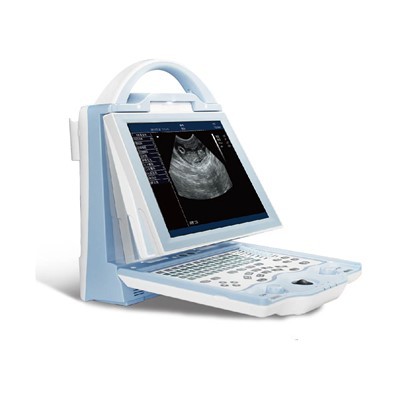
The lightweight veterinary diagnostic ultrasound solves these pain points: its compact and portable design, coupled with a 10.4-inch rotatable medical LED screen, offers wide viewing angles, high brightness, and high contrast, ensuring clear details from any angle; its high-end lithium battery provides up to 200 minutes of runtime, supporting all-day field work on a full charge, truly enabling diagnosis anytime, anywhere, without being restricted by power sources.
Cumbersome to operate and slow to learn
Many ultrasound devices have complex menus and numerous parameter adjustments, requiring a long time for beginners to become proficient, leading to:
- Long queues for ultrasound examinations during peak hours
- Incorrect parameter settings lead to blurry images and increased risk of missed or misdiagnosed cases
- Disorganized case files result in low efficiency for review and referral processes,
A good ultrasound device should lower the barrier to entry and simplify the process; its core advantages are reflected in three points:
- One-click save/view/print, eliminating the need to navigate through multiple menus.
- Built-in search function for quick image and case location, saving search time.
- Built-in 4GB storage, capable of storing approximately 5000 images, with data security guaranteed even in the event of a power outage.
With the process simplified, even beginners can quickly get started, focusing their energy on interpretation rather than operation, thus improving the overall outpatient flow rate.
How to efficiently archive images and medical records?
Pet hospitals perform a significant number of ultrasound examinations daily, and disorganized data management directly slows down efficiency:
- Images are stored on different devices, making aggregation difficult.
- Unclear case classification hinders review, teaching, and referral.
- Lack of network printing slows report generation. Modern ultrasound diagnostic equipment, equipped with built-in workstations, enables unified management of multiple cases, supports network printing and protocol templates, and allows for rapid retrieval and standardized output for outpatient record keeping, research documentation, and inter-regional referrals, ensuring that imaging data truly serves the entire diagnostic and treatment process.
How to choose the right ultrasound for pet clinical use?
Portability and long battery life are prioritized to meet the needs of outpatient visits and emergency situations.
The screen should be rotatable and high-brightness to adapt to various examination postures and environments.
One-click operation and a simple menu reduce the learning curve for the team.
Large storage capacity and power-off protection ensure data security.
Support for multi-case management and network printing adapts to daily workflows.
Veterinary diagnostic ultrasound provides stable and clear imaging for common companion animals and economic animals such as dogs, cats, horses, and cattle. With standardized probes and compatible parameters, it covers routine examination needs such as obstetrics, abdominal, and superficial tissue examinations, balancing reliability and practicality.
Ultrasound isn't about being overly complex; the key is a stable, simple, and hassle-free tool that helps veterinarians make diagnoses. From field visits to routine outpatient examinations, from new veterinarians to highly efficient teamwork, a good ultrasound device can genuinely improve diagnostic efficiency, reduce the risk of missed diagnoses, and make pet treatment more accurate and smoother.

Send Inquiry